Love isn’t on sale this Valentines Day, finds Klaviyo data
Valentine’s Day may be circled on the calendar for February 14, but this year’s shopping behavior reflects a broader shift in how and why consumers spend.
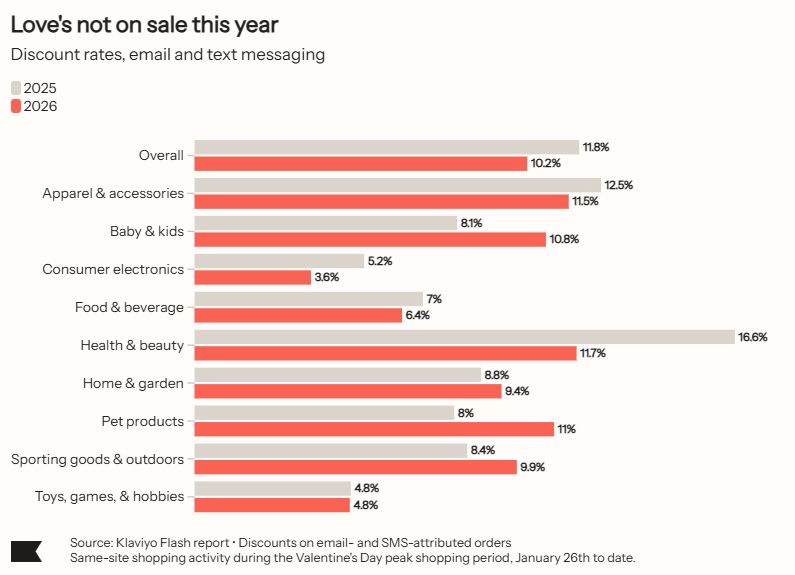
Across ecommerce, there were fewer discounts to be had this year, with average offers down from 12% last year to just over 10% this year. In some categories, the pullback was even more pronounced particularly in health and beauty, where average discounts dropped from 17% to around 12%. With less room to rely on promotions, brands are focusing more on when and how they show up, using relevance, personalization and data to connect with consumers.
“Valentine’s Day isn’t just one thing anymore,” said Jamie Domenici, Chief Marketing Officer at Klaviyo. “It’s no longer about buying a gift for one special someone. For some people it’s Galentine’s Day, for others it’s a treat-yourself moment or an excuse to do something fun. If you know which of those moments your customer is shopping for, you don’t have to rely on discounts to get their attention.”
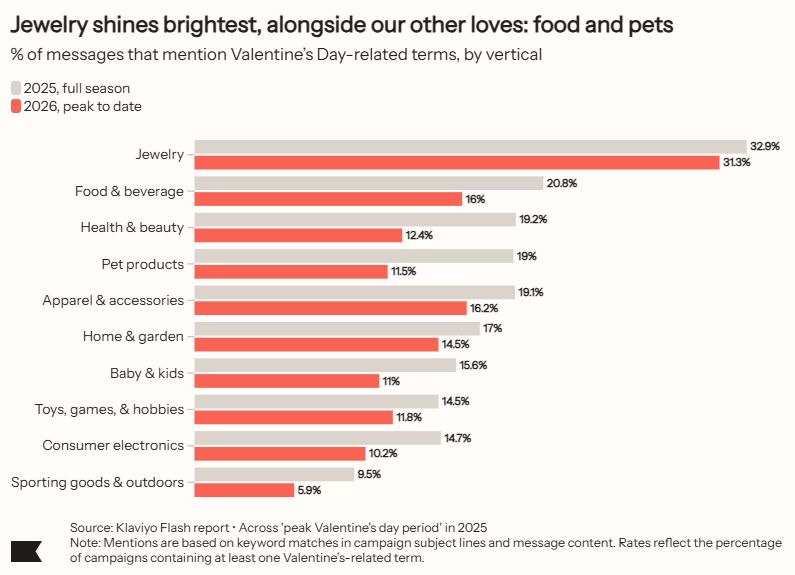
From pet products to food and drink, Valentine’s Day gifting has moved beyond romantic clichés
Jewelry remains the most prominent Valentine’s Day category, with about 31% of campaigns referencing the holiday. What’s changed is how broadly the holiday is now defined. Food and beverage brands and pet products now rank among the most popular Valentine’s Day categories, reflecting how consumers are extending Valentine’s Day beyond traditional romantic gifting.
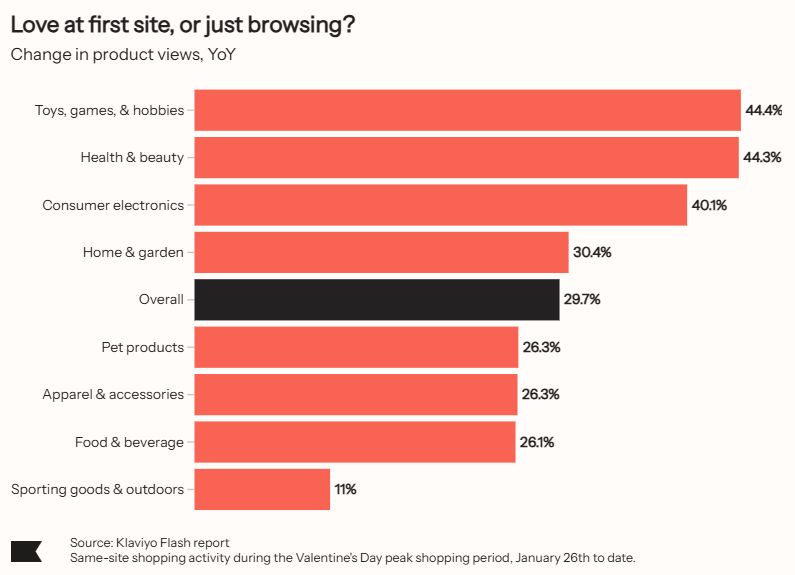
The stereotype of last-minute panic buying doesn’t hold up
Consumers aren’t as forgetful around Valentine's Day as the stereotype suggests. Product views around Valentine’s Day are up 30% year over year, showing that consumers are exploring options early, narrowing their choices, and then waiting to purchase closer to the holiday. As February 14 approaches, that browsing turns more intentional, setting the stage for a concentrated buying window.
Valentine’s Day is becoming a moment for self-indulgence
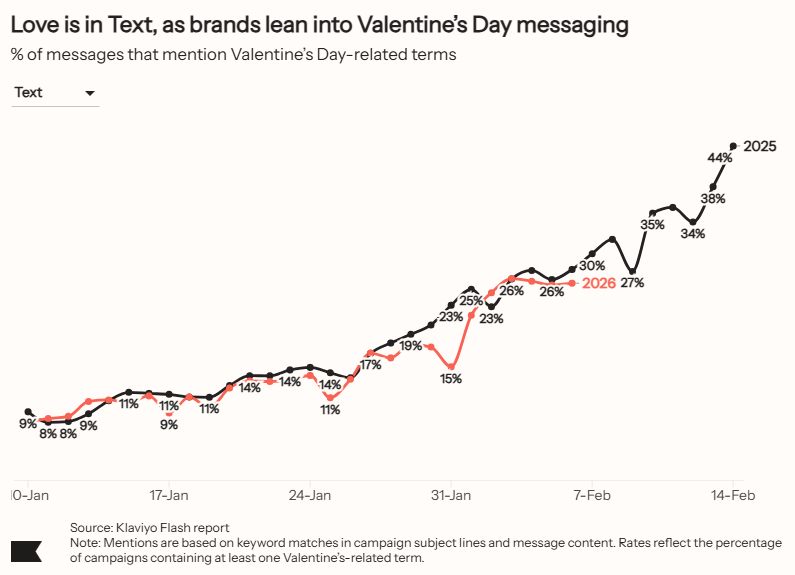
Valentine’s Day is also increasingly becoming a moment to indulge yourself, alongside Galentine’s-style celebrations and traditional gifting. While planned gifts are often purchased earlier in the season, a meaningful share of buying decisions now happen on the holiday itself reflecting more spontaneous, in-the-moment purchases. That shift is mirrored in text messaging, which spikes on February 14, when more than 40% of campaigns reference Valentine’s Day.
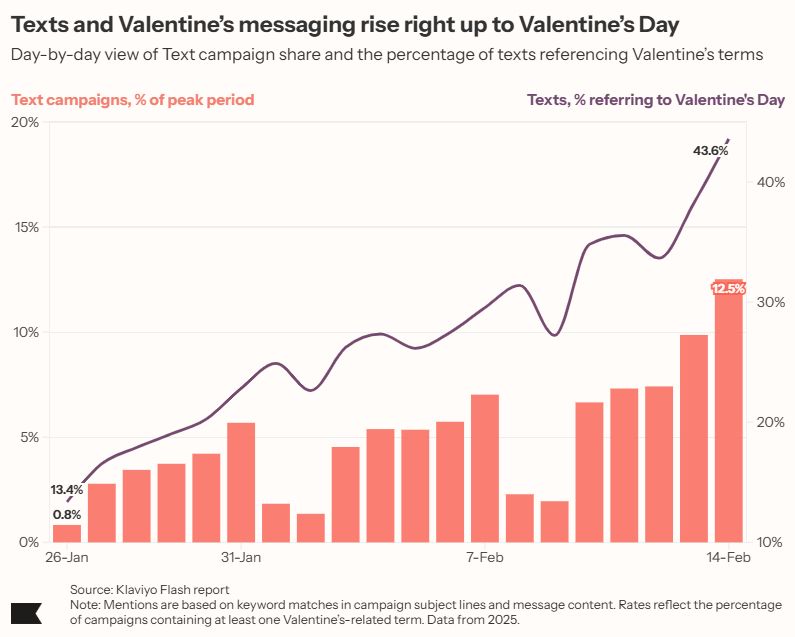
Valentine’s Day is no longer a one-day event.
Valentine’s shopping now begins almost immediately after the New Year, with brands leaning into holiday messaging in the first days of January and activity steadily building from there. This year, momentum picked up by late January — nearly three weeks before February 14 — underscoring that Valentine’s has quietly become a full-season moment rather than a last-minute rush.
Access the full breakdown of data here.
Methodology: This analysis examines same-site shopping and marketing activity across a cohort of GMV-producing Klaviyo customers during the Valentine's Day peak shopping period, January 26 through February 14, comparing 2025 to 2026 year-to-date. All data is anonymized and aggregated.